

Fast Charging* in 30 Mins
Designed with convenience in mind, charging ports come available in both AC and DC with fast charging* up to 100kW supported on single DC output.
*Fast charging is based on DC charging only.
With an island-wide network of charging stations in the works, we make driving EVs even more enjoyable with an easy-access, hassle-free charging experience.

All the mobility, with less environmental impact:
To support Singapore’s sustainability goals, Union aims to install over 2,000 EV charging points island-wide in the next 5 years. While this benefits EV owners, property owners and car park operators also stand to benefit when they choose to install EV charging facilities and draw the growing number of EV owners.

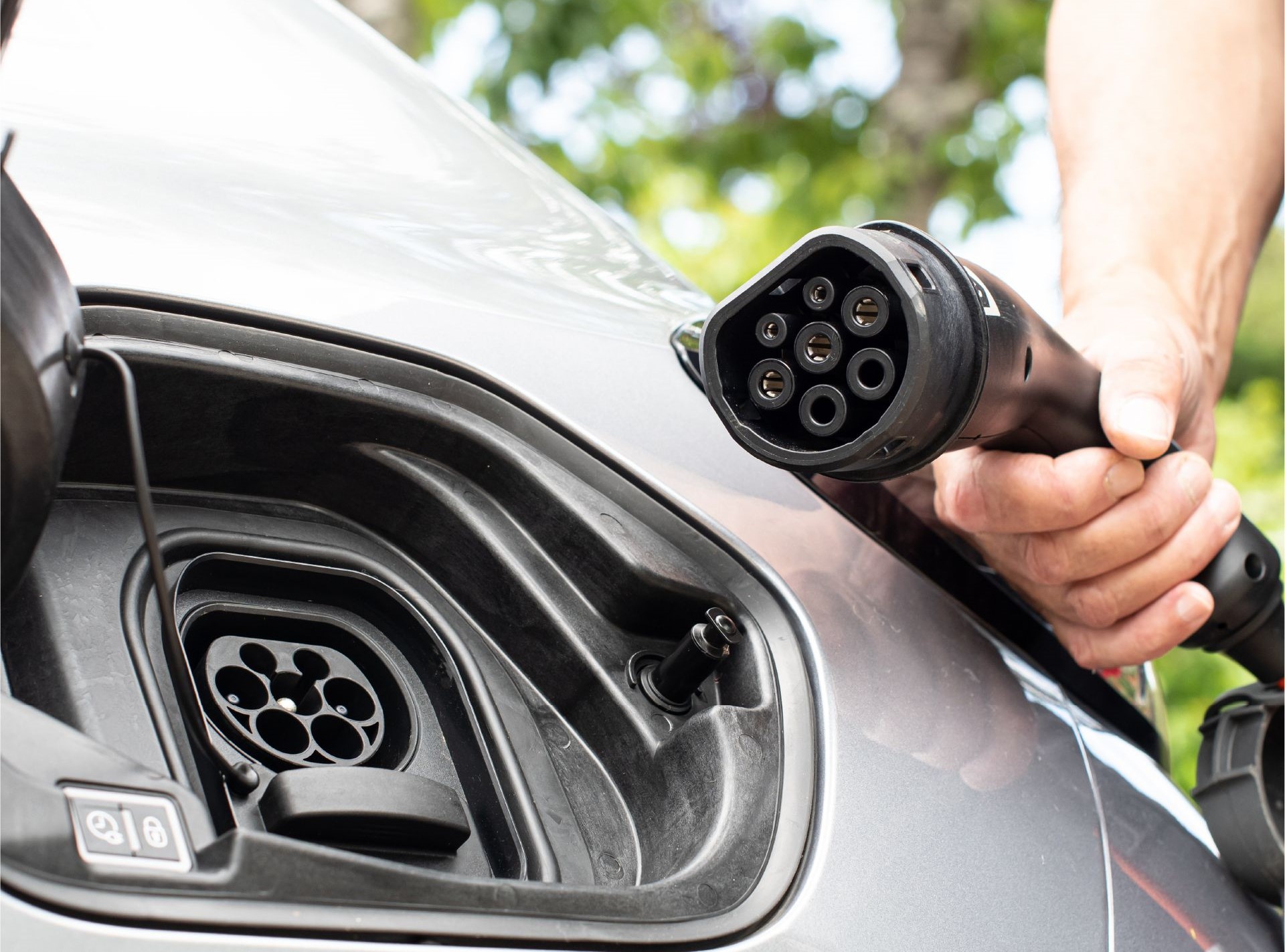
Designed with convenience in mind, charging ports come available in both AC and DC with fast charging* up to 100kW supported on single DC output.
*Fast charging is based on DC charging only.

Track the power you use, make payment, even see your charging status away from your vehicle—it’s all easy with our user-friendly app.

To install charging facilities on your property, our engineering team works with you from site assessment to installation and deployment.

Rest assured we take care of everything. After charging infrastructure is in place, a qualified LEW does the testing and commissioning.
It is available on the App store and the Google Play Store.
Follow the following steps to start charging your electric vehicle.
If you are unable to start a charging session, please try the following troubleshooting steps:
Ensure the charging cable is securely connected to both the charger and your vehicle. In most cases, unplugging and re‑plugging the cable will resolve the issue.
Close and reopen the Union Charge App, then attempt to start the charging session again.
Outstanding payments from previous charging sessions may prevent a new session from starting. Please clear any unpaid charges before retrying.
If the issue persists or you encounter other technical problems (e.g. the charging station is faulty or not powered on), you may:
Our support team will assist you as soon as possible.
On rare occasions, the charging plug may be stuck in your vehicle’s charging socket due to a charger malfunction or a connection time‑out. Please remain calm and try the following steps:
Use your car key fob to lock and unlock the vehicle, then gently remove the charging plug from the socket.
If the above steps do not work, you may need to perform a manual release according to your vehicle manufacturer’s instructions.
If the issue persists, please report it via the Union Charge App or contact our customer support team via WhatsApp/chatbox at +65 8054 2857 for assistance.
Just like charging your mobile devices, leaving your EV on the charger for an extended period may shorten the battery’s lifespan. To help preserve battery health, it is recommended not to wait until the battery is fully depleted before starting the next charging cycle.
Based on guidance from EV manufacturers, we recommend charging your EV up to around 80% for regular use, as this helps optimise battery longevity and performance.
Some EV manufacturers are equipped with smart battery management systems that act as buffers to reduce the impact on battery health and power demand, depending on your EV model.
If you suspect that the charger is faulty, please report the issue through the Union Charge App or contact our customer support team via WhatsApp/chatbox at +65 8054 2857.
If the charger stops charging during an active session, you may try the following steps:
Safely unplug the charging connector from your vehicle, then plug it back in and restart the charging session via the app.
If available, you may try using a different charger at the same charging station.
If the issue persists, please report it via the Union Charge App or reach out to our customer support team at +65 8054 2857 for assistance.
You can locate your nearest charging station by using the Union Charge mobile app, available on the Google Play Store and Apple App Store, which allows you to search for charging locations easily.
Alternatively, you may also view our charging station locations on our website: Location of Charging Stations
We are continuously expanding our charging network, and new locations will be added progressively.
Just like charging your mobile devices, leaving them on the charger for an extended period may shorten the battery’s lifespan. To preserve your battery’s lifespan, do not wait until it depletes entirely before the next charging cycle.
Some EV manufacturers have smart systems installed as buffers to reduce the impact on power demand, depending on your EV.
Charging time depends on several factors:
Larger battery capacities (measured in kWh) generally take longer to charge compared to smaller batteries.
Charging from a very low state of charge (e.g. 0%) will take longer than topping up from a higher level such as 50%.
As a general rule, chargers with higher power ratings deliver faster charging. However, actual charging speed also depends on the vehicle’s design, including battery size, on‑board charger capacity, AC and/or DC compatibility, and the battery management system.
The charging speed is ultimately limited by your vehicle’s maximum charging rate. Using a higher‑powered charger does not necessarily mean faster charging if your vehicle cannot support it.
Colder climates may result in longer charging times, especially when using rapid chargers. In a warm climate like Singapore, lithium‑ion batteries generally operate optimally and remain long‑lasting.
If you notice that AC or DC charging is significantly slower than usual, please report the issue via the Union Charge App or contact our customer support team via WhatsApp/chatbox at +65 8054 2857 for assistance.
Yes, if your electric vehicle adheres to Singapore’s regulations and standards, your vehicle is able to charge at our charging stations. Mennekes (Type 2) chargers and the Combined Charging System 2 (CCS 2) are the most common types of EV chargers in Singapore.
You can either use an AC or DC charger to power your vehicle. As a general guide, an AC charger is normally used for homes or light commercial sectors e.g. office buildings. AC Charger usually takes 4 to 5 hours to charge your vehicle depending on the EV model. On the other hand, DC charger is commonly used in heavy commercial and industrial sectors e.g. petrol stations, shopping malls, or factories to cater for heavy usage electric fleets or quicker charging time of 1 to 2 hours when time is of the essence.
Where a charging point is located in public car parks and any other restricted areas, you will be required to pay the parking fees to the car park operators, unless specifically mentioned.
If you are unsure about this, please consult the building or the car park administrators.
The cost of charging your electric vehicle is dependent on the various energy market factors (e.g. electricity prices, fuel prices and other related operational costs). Updated prices will be reflected in the Union Charge app.
Your credit/debit card may have expired or have insufficient funds. You may try using another credit/debit card, or contact your bank for card-related issues.
Yes. You can charge your EV without registering an account in the Union Charge App. You may:
However, downloading the app allows you to better track your charging sessions, view charging status, and report issues more easily.
You may refer to the transaction summary at the end of each charging session. The transaction details can be served as an invoice for your record tracking. You may also check your past transaction records under “History”.